

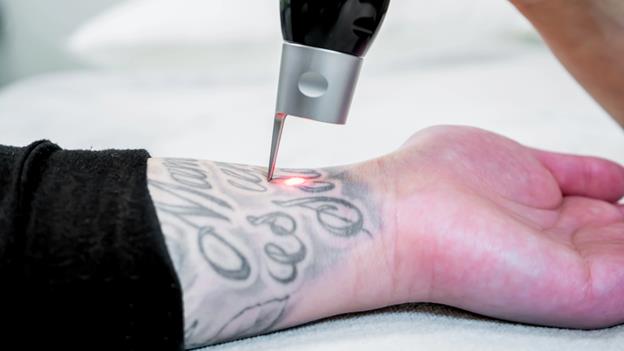
The art of the tattoo is as old as civilization itself, but the desire to erase that same art is a rapidly growing modern trend. Our clients usually request tattoo removal because of a change in lifestyle, a career move, or simply tattoo regret over a piece that no longer represents them.
The worldwide tattoo removal market was valued at around $1.29 billion in 2025 and expected to reach $1.49 billion by the end of 2026. And a 2023 survey by Advanced Dermatology found that 1 in 4 Americans regret at least one tattoo.
Laser tattoo removal in Torrance has become one of the most requested cosmetic laser treatments as technology has evolved to make the process safer and more accessible than ever before.
However, many patients mistakenly walk into their first consultation expecting a magic-eraser effect. The reality is that permanent ink removal is a biological and physical journey because not all tattoos are created equal.
Several factors will determine how many tattoo laser sessions you will need and how successful the final result will be. Read on to learn the science behind the laser and the variables that make certain tattoos more stubborn than others to erase from your skin.
How Laser Tattoo Removal Works
A tattoo is permanent because the ink particles injected into the dermis are too large for your body’s white blood cells to carry away, meaning they are essentially trapped in the skin. Tattoo removal lasers work by emitting ultra-short pulses of high-intensity light energy.
This energy is absorbed by the ink, causing it to shatter into microscopic particles. Once the ink is broken down into these tiny fragments, your body’s immune system takes over. Over several weeks, your lymphatic system flushes these particles out of your body naturally.
Because this process relies on your body’s internal cleaning crew, multiple sessions for complete tattoo removal are required. These appointments are typically spaced 6 to 8 weeks apart to allow for proper healing and ink clearance.
Also Read: Laser Tattoo Removal: How Soon Can You Remove a New Tattoo?
8 Factors That Can Make a Tattoo More Difficult to Remove
Ink Color
When it comes to removing colored or dark tattoos with lasers, color is the single most influential factor. The laser works based on light absorption, so for the ink to shatter, it must absorb the laser’s wavelength. Here’s a breakdown:
- Black Ink: This is the easiest color to remove. Black ink absorbs all laser wavelengths, making it highly responsive to treatment.
- Red Ink: Generally considered the second easiest, as it absorbs green light wavelengths well.
- The Challenging Palette: Colors like green and deep blue require specific wavelengths and often require more sessions to achieve significant tattoo fading.
- The Hardest Colors: White, yellow, light blue, and neon shades are notoriously difficult. White ink often contains titanium dioxide, which can turn dark through oxidation when exposed to a laser. And yellow and orange inks reflect most of the laser energy rather than absorbing it.
This is why professional clinics use different lasers to target these specific wavelengths, but even with the best technology, a multi-colored mural will always be harder to clear than a solid black silhouette.
Tattoo Age
Time is actually on your side when it comes to tattoo removal. Older tattoos are generally easier to remove than fresh ones. Over time, your body attempts to break down the foreign ink particles, which is why old tattoos often look fuzzy or faded.
Because the ink density has already begun to dissipate naturally, the laser has less work to do. Conversely, a brand-new tattoo has high ink density and a robust structure, requiring more energy and more sessions to break apart.
Ink Depth and Quality
The origin of your tattoo plays a massive role in its removal timeline. For example, professional tattoos are typically more difficult to remove. Professional artists use high-quality, concentrated inks and inject them deep into the dermis at a consistent level. The saturation is high, meaning there is simply more ink volume to break down.
Often done with “India ink” or unconventional materials, amateur tattoos are usually easier to remove because the ink is applied more superficially and with lower density. However, because they are applied inconsistently, some areas may fade quickly while others linger.
Furthermore, the chemical composition of the ink matters. Some inks contain metallic elements or specific additives that can be resistant to laser energy, making a professional laser tattoo removal service in Torrance essential for a safe, tailored approach.
Tattoo Size and Ink Density
It is a simple matter of physics: the larger the tattoo, the more ink there is to process. A small symbol on the wrist will naturally require fewer pulses and less recovery time than a full back piece.
However, ink density is just as important as surface area. A fine-line tattoo with lots of skin showing through will fade much faster than a tribal piece or a blackout-style tattoo where the ink is packed tightly. High ink saturation requires the laser to basically peel the tattoo away in layers over many months.
Skin Tone and Type
Your skin type influences how a technician approaches your treatment. We use the Fitzpatrick Scale to categorize skin types based on their reaction to UV light and pigment levels.
Safe and effective laser tattoo removal requires adjusting the laser’s intensity based on the patient’s skin tone. Darker skin tones have more natural melanin, which can also absorb laser energy. This means practitioners must use more conservative settings to avoid hypopigmentation (lightening of the skin) or scarring.
Keep in mind that although technology has improved to make removal safe for all skin types, those with darker skin may require more sessions at lower intensities to ensure the skin remains healthy.
Tattoo Location on the Body
One of the most overlooked factors in tattoo removal is the location of the ink. Remember, the laser breaks the ink, but your blood and lymph nodes carry it away. Therefore, tattoos located in areas with high blood circulation fade the fastest. Here’s the breakdown:
- Fastest Removal: Chest, neck, and back (closest to the heart).
- Slower Removal: Arms and legs.
- Slowest Removal: Hands and feet.
If you are trying to remove a tattoo on your ankle, expect it to take longer than a tattoo on your shoulder, simply because the circulation at the extremities is less robust.
Body & Lifestyle Factors
Since your immune system does the heavy lifting, your overall health is a major variable. For one, research shows that smoking can significantly decrease the success rate of tattoo removal by constricting blood vessels and slowing the immune response.
On the flip side, staying hydrated and maintaining an active lifestyle can actually speed up the fading process by boosting lymphatic drainage.
And finally, following recovery tips after tattoo removal, like keeping the area out of the sun and avoiding picking at scabs, is crucial. Skin preparation for laser tattoo removal, including using sunblock weeks before your session, also ensures your skin is in peak condition for the laser.
Laser Technology Used for the Removal
Not all lasers are equal. For years, the Q-switched laser was the industry standard. While effective, it delivers energy in nanoseconds.
Modern Picosecond lasers, the latest iteration of which is called Enlighten Pico, represent a massive leap in cosmetic laser treatments. They deliver energy in trillionths of a second. This faster delivery creates a photoacoustic effect that shatters ink into even smaller particles compared to the “pebbles” left by older lasers. Picoway lasers will thus usually require fewer sessions with better clearance of stubborn colors.
How Many Sessions Will You Need?
The million-dollar question. On average, most patients require 6 to 12 sessions. However, based on the factors above, some may see results in just 4, while others with dense, multi-colored tattoos on their feet might need 15. This is why a personalized assessment is the only way to get an accurate estimate.
It is important to understand the difference between complete removal and tattoo fading. While many tattoos can be removed until they are invisible, some may leave a ghost image (tattoo lightening) or slight pigment changes.
If your goal is a cover-up tattoo, you may only need 3–5 sessions of tattoo fading to give your new artist a clean enough canvas to work on.
Also Read: Laser Tattoo Removal and Laser Hair Removal: Can They Be Done in the Same Area?
Expert Tattoo Removal in Torrance
Are you ready to say goodbye to your ink? Every tattoo has a story, but it doesn’t have to be a permanent one. At Revive Center Wellness Centers, we specialize in providing safe, effective laser tattoo removal tailored to your unique skin and ink profile.
Request an appointment today at our Torrance location to receive a personalized assessment. Find out how many sessions your tattoo may require and start your journey toward clear skin with the experts who care.