

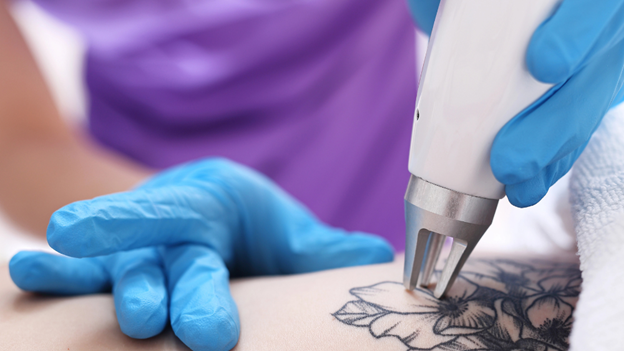
Having second thoughts about your new tattoo? You’re certainly not alone. Tattoo regret happens far more often than people choose to admit.
Sometimes the artwork doesn’t match the original vision, the placement feels wrong, or the tattoo artist missed the mark.
For these reasons, more people are looking into early laser tattoo removal only days or weeks after getting fresh ink. The problem is that many mistakenly think they can start laser tattoo removal sessions immediately, but this can cause potential skin damage.
Before you start a removal treatment plan, it’s a good idea to understand first how newly tattooed skin heals and how lasers interact with that fresh wound. Read on to find out how laser tattoo removal works, how long you should wait, the risks of starting too soon, and what you can do in the meantime if you’re super eager to move forward.
How Does Laser Tattoo Removal Work
Laser tattoo removal uses highly concentrated light energy to target pigment particles beneath the skin. When the laser hits the ink, it breaks those pigment particles into smaller fragments.
Over time, your immune system clears out those fragments through natural processes. Although the concept sounds simple, the tattoo removal treatment requires careful timing because the laser interacts directly with the skin’s deeper layers.
New tattoos disrupt the skin barrier. The needles used to insert ink penetrate the dermis, creating thousands of micro-injuries. Immediately after getting a tattoo, your body responds with inflammation, swelling, and redness as part of the healing cycle.
Introducing laser energy too soon can disrupt this process because the skin is already stressed and vulnerable while it heals itself.
Also Read: Laser Tattoo Removal vs. Tattoo Lightening: Which Option Fits Your Goals?
When Is It Safe to Start Removing a New Tattoo?
Most certified providers agree that the standard waiting period before beginning removal is six to eight weeks after receiving a new tattoo. This gives the skin time to repair itself, close micro-wounds, and re-establish a healthy barrier. Beginning treatment before this point can dramatically increase risks.
That said, timing can vary depending on several factors. The depth and density of ink play a significant role, as thicker or heavily saturated tattoos often create a more intense healing response.
Skin type also matters. Sensitive skin, or skin prone to redness or irritation, may need a longer recovery period.
The location of the tattoo can influence healing speed as well. Areas with thinner skin or higher friction, like the ankles, ribs, or hands, tend to heal more slowly. And of course, any lingering scabs, peeling, or signs of infection are indicators that you need more time
Risks of Removing a Tattoo Too Soon
Getting laser treatment too soon can trigger serious consequences. One of the highest risks is skin damage, as freshly tattooed skin is a wound, compromising its barrier function. Applying laser energy during this stage can cause unsightly scarring because the tissue is not yet strong enough to absorb the laser’s impact.
Pigment changes are another concern. Treating a healing tattoo can cause discoloration, such as hypopigmentation (light patches) or hyperpigmentation (dark patches,) that can take months or even years to fully resolve.
Infection is another risk; if the tattooed area is still raw, the laser can open the wound further or introduce bacteria. Even a minor infection can delay removal for months and lead to lasting texture changes.
There is also the issue of poor removal results. Lasers rely on targeting pigment that sits stable within the skin, but a new tattoo is still settling, and the ink particles have not fully locked into place. Treating too early often leads to weak or incomplete results, meaning you may ultimately need more sessions than you would have if you had waited.
Signs Your Tattoo Is Healed Enough for Laser Treatment
The following signs indicate that the outer and inner layers of the skin have moved through the major phases of healing, making laser treatment safer and more effective:
- The skin shows no scabs, peeling, or open areas.
- Redness, warmth, and inflammation have disappeared.
- Flaking has stopped, and the skin’s normal texture has returned.
- The tattoo lines look stable and fully settled.
Early Intervention Alternatives Before Laser Treatment
If you’re within the first few weeks of receiving a tattoo and want it gone as soon as possible, there are safer options while you wait. The most important step is consulting a certified laser removal specialist. A professional evaluation helps you understand the best timing and sets realistic expectations for the number of sessions you may need.
Some people consider tattoo-lightening creams, but these products have significant limitations. Most over-the-counter creams cannot reach the depth of professional tattoo ink. While they may slightly fade the surface, they cannot replace laser treatment and should be used only with a specialist’s guidance to avoid irritation.
Another option is a cover-up or tattoo lightening. Skilled tattoo artists can redesign or lighten up the tattoo once it has healed enough, providing a temporary or even long-term solution if you are not ready for laser removal.
Sun protection is also essential during this waiting period. UV exposure can darken tattoo pigment and irritate healing skin, which may complicate removal later. Keeping the tattooed area covered or using broad-spectrum sunscreen greatly helps maintain the skin’s quality before your first session.
What to Expect at Your First Laser Tattoo Removal Session
Once your tattoo has healed sufficiently, your first session begins with a thorough evaluation. A specialist will assess the tattoo’s age, color, size, placement, and ink density. Patch testing is commonly performed to gauge how your skin responds to the laser and to choose the most effective wavelength for your tattoo.
Pain levels vary. Many describe the sensation as similar to the feeling of getting a tattoo, but quicker. Some clinics use cooling devices or topical numbing to increase comfort during the session.
The number of sessions required depends on several variables, including ink depth, pigment type, and your body’s natural clearance rate. Most people need multiple sessions spaced several weeks apart to allow the skin time to recover and to give the immune system time to process the pigment.
Aftercare Tips for Best Results
Proper aftercare follows immediately after the session and is absolutely necessary to help you avoid complications and make sure the skin is healing well. Here’s what you should keep in mind:
- Keep the area clean, dry, and protected during the early healing period.
- Avoid direct sun exposure, which can increase irritation and slow fading.
- Support the skin barrier with gentle moisturizers and hydration.
- Monitor the area for unexpected redness, swelling, or signs of infection.
Good aftercare that follows these guidelines will help strengthen the skin’s ability to recover between sessions and help each treatment build upon the previous one.
Who Should Avoid Starting Laser Tattoo Removal Early?
Certain individuals should delay treatment, even if the tattoo appears healed. People with delayed wound healing, whether due to medical conditions, medications, or smoking, may need extra time, for example.
Anyone who has recently experienced an infection in the tattooed area must wait for full recovery before beginning removal.
Those who are prone to keloids also face higher risks, as early laser exposure can trigger aggressive scarring.
Finally, immunocompromised patients should speak with a qualified provider before considering treatment because their bodies may have difficulty managing inflammation or clearing pigment particles.
Safe & Effective Laser Tattoo Removal
Early tattoo removal is definitely possible, but the timing is important to prevent scarring on skin that isn’t ready for the strength of a penetrating laser. Waiting for the skin to heal completely protects it from unnecessary damage and supports smoother fading over time.
Working with an experienced laser specialist allows you to move forward with confidence, knowing your removal plan is tailored to your skin, your tattoo, and your long-term goals.
If you’re feeling the pull toward early removal, take a breath, let your skin recover, and approach the process with patience. Your results will benefit from it.
To find out more about tattoo removal treatment, make an appointment today at Revive Wellness Center at one of our locations in Torrance and Palm Springs.