
An increasing number of people are choosing to fade or remove old tattoos for career, aesthetic, or deeply personal reasons. And the good news is that modern technology has made this process safer and more effective than ever before.
If you’re rethinking your ink, you basically have two options: full laser tattoo removal and tattoo lightening (or fading). Both use the same technology, but full removal provides a clean, ink-free slate versus lightning, which focuses on creating a less saturated canvas for new body art.
Modern laser technology offers precision and safety missing in older, riskier methods. However, choosing the right path depends entirely upon your long-term vision.
What Is Laser Tattoo Removal?
Laser tattoo removal is a cosmetic process using concentrated light energy to safely break up tattoo pigment particles embedded in the skin. It is the gold standard for achieving a complete clearance of unwanted ink.
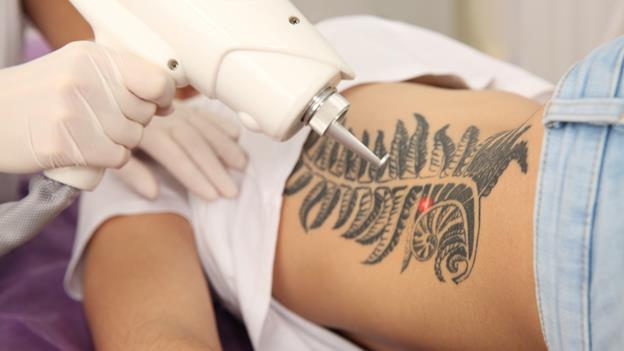
A high-intensity laser is passed over the tattooed area. The dark tattoo pigment selectively absorbs the laser’s energy in nanoseconds or picoseconds, causing the ink particles to rapidly heat up and violently shatter into microscopic fragments.
Your body’s immune system recognizes these tiny fragments as waste products. Specialized white blood cells (macrophages) then engulf these particles and naturally flush them out of the body over time through the lymphatic system. This is why results are gradual and treatments are spaced several weeks apart.
Modern clinics rely on advanced lasers to maximize safety and results, including:
- Q-Switched Lasers: These are the traditional workhorses, emitting energy in nanosecond pulses, and are highly effective for breaking down dark colors.
- Picosecond Lasers (Enlighten PICO): The current gold standard, these lasers use ultra-short picosecond pulses in a trillionth of a second to shatter the ink into finer particles, which the body can clear faster. The laser has 3 different wavelengths specifically for different colors of ink. This typically results in fewer total sessions and minimizes thermal damage to the surrounding skin.
Patients will usually experience a sensation akin to a rubber band snap. Removal requires a series of treatment sessions, around 6–10 or more, with minimal downtime and gradual fading over the following months. The goal is complete pigment clearance and the restoration of a natural skin appearance.
What Is Tattoo Lightening (or Fading)?
Tattoo lightening, also known as fading, is a controlled process designed for partial clearance rather than full removal. It is not an attempt to erase the tattoo entirely but rather to reduce its saturation and visibility.
The goal of lightening is to create a lighter background for a tattoo cover-up. When a new tattoo is placed over old, dark ink, the colors of the new design are often muddy and muted.
By fading the existing tattoo, the artist gains a much lighter canvas, allowing them to use a wider range of colors, more detail, and brighter pigments.
Lightening typically uses the same advanced laser systems as full removal, but with fewer treatment sessions or, in some cases, lower energy settings. While a full removal might require 8-10 sessions, a lightening treatment is usually achieved in only 2 to 4 sessions.
The emphasis is on reducing saturation, not erasing entirely. Some clients specifically prefer this method to:
- Preserve parts of their original design that they still like.
- Reduce the overall treatment cost and time commitment compared to full removal.
Tattoo lightening can be a tool for artistic revision, offering the quickest and most effective route to a vibrant, successful cover-up. Laser tattoo removal can safely lighten or remove old eyebrow permanent makeup, allowing patients to refresh their look and have their brows professionally redone with precision and symmetry.
Comparing the Two Approaches
Choosing between full removal and lightening hinges on your long-term cosmetic vision, either with total clearance or artistic revision. Here is a clear comparison:
| Laser Tattoo Removal | Tattoo Lightening | |
| Goal | Complete pigment clearance | Partial fading for a cover-up |
| Sessions Required | 6–10+ (depending on ink/color) | 2–4, lighter energy settings |
| Downtime | Mild redness, swelling, flaking for 1–2 days | Typically less irritation and quicker recovery |
| Cost | Higher due to more sessions over a longer period | Lower overall |
| End Result | Natural, clear skin appearance | Significantly lighter design ready for new ink |
Factors That Affect Results
Tattoo Color and Age: Dark inks absorb laser light most efficiently and respond fastest. Lighter colors are more challenging and may require specialized, multi-wavelength lasers. Older tattoos tend to fade more easily as the pigment has naturally migrated over time.
Skin Type: Melanin levels in the skin influence how laser energy is absorbed. Clinics must adjust settings for safety to avoid pigmentary changes, especially on darker skin.
Tattoo Depth and Size: Professional tattoos are typically applied deeper and with more dense pigment than amateur ones, often requiring more sessions. Larger tattoos take more time during each session.
Immune Response: The speed at which your body clears the fragmented pigment is crucial. Lifestyle factors like good hydration, a healthy diet, and excellent circulation (avoiding smoking) directly affect the speed and success of the process.
What to Expect During Treatment
First, a nurse practitioner will assess your skin type, evaluate the tattoo’s color, size, and depth, and discuss your goals during your professional consultation. This is the time to ask about the specific laser technology they use and what results are realistically achievable.
Before the laser is applied, a topical numbing cream may be used, and a cooling device is often employed during the treatment to minimize discomfort. The laser delivers rapid pulses of light, and the session itself is quick, typically lasting 10–30 minutes depending on the tattoo size.
Proper aftercare is essential for effective healing and minimizing side effects:
- Keep the treated area clean and covered with a non-stick dressing for the first 24-48 hours.
- Avoid sun exposure entirely until the skin is fully healed, and use a broad-spectrum SPF 30+ religiously afterward.
- Apply prescribed ointments or pure lavender oil to support recovery and reduce the risk of infection.
Potential mild side effects include temporary swelling, redness, and minor blistering or scabbing, all of which are normal parts of the healing process.
Is Tattoo Lightening Better for a Cover-Up?
Yes, tattoo lightening is almost always the superior choice when the goal is a cover-up.
A dark, heavily saturated tattoo limits a cover-up artist’s design options to only bigger, bolder, and darker concepts. By removing the dense dark pigment through a few laser sessions, you are essentially erasing the old tattoo’s shadow. This allows the tattoo artist to:
- Use a more vivid palette of colors, even light ones.
- Design a cover-up that is not much larger than the original piece.
- Achieve a new design that is more detailed and less prone to having the old lines bleed through.
When Full Laser Tattoo Removal Is the Better Choice
While lightening is great for cover-ups, full removal remains the best choice in certain scenarios:
- Career or Professional Needs: For highly visible tattoos that restrict employment opportunities or affect professional confidence.
- Unwanted or Traumatic Designs: Tattoos that carry negative memories you want to leave behind.
- Allergic Reactions or Irritation: In rare cases, the body can develop an allergic reaction to ink pigment, or the area may suffer from chronic irritation. Complete removal is necessary to clear the source of the reaction.
- Clean Slate: If the goal is simply to have natural, ink-free skin, full removal is the only solution.
Wrap-Up
Both laser tattoo removal and tattoo lightening are sophisticated, safe options built on proven laser science, and the only real difference is your vision.
If you need to completely eliminate ink for a professional change, a fresh area of skin, or emotional peace, full removal is the clear path. Whereas, if you are excited by the prospect of transforming old art into a new masterpiece, tattoo lightening will give your artist the best possible canvas to work on.
Ready to say goodbye to your tattoo with expert removal? Request an appointment at Revive today.